
Partial Knee Replacement Specialists
Partial Knee Replacement Surgery in Malden and Stoneham, MA
Knee arthritis does not always affect the entire joint. For some patients, damage is concentrated in one portion of the knee while the remaining areas are still healthy. In these cases, partial knee replacement may be considered as an alternative to replacing the entire knee joint.
Our orthopedic team at Agility Orthopedics evaluates knee pain, mobility, joint damage, and each patient’s individual needs before recommending surgery. Patients in Stoneham, Malden, and surrounding Massachusetts communities can receive comprehensive knee replacement care, from initial evaluation through rehabilitation.
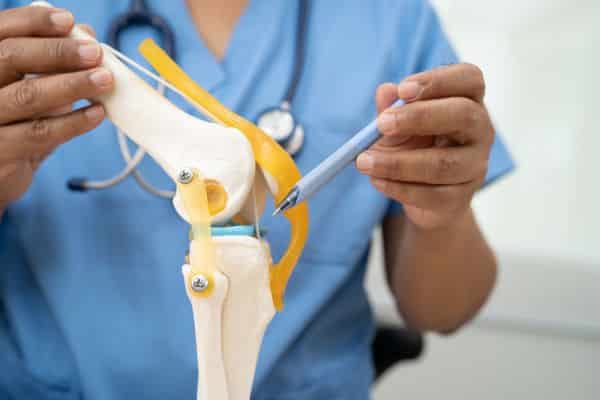
What Is a Partial Knee Replacement?
Partial knee replacement, also called unicompartmental knee replacement, is a procedure that replaces only the damaged portion of the knee rather than the entire joint. The knee has three main compartments, and arthritis may sometimes be limited primarily to one of these areas.
During surgery, damaged bone and cartilage in the affected compartment are addressed and replaced with prosthetic components. Healthy areas of the knee are preserved rather than replaced unnecessarily.
This approach is not appropriate for every person with knee arthritis. Determining whether a partial or total knee replacement is appropriate requires a detailed orthopedic evaluation.
Do I Need a Knee Replacement?
Partial knee replacement may be considered when osteoarthritis is primarily confined to one compartment of the knee. Symptoms can include ongoing knee pain, stiffness, swelling, reduced mobility, or difficulty completing everyday activities.
Before recommending joint replacement, an orthopedic surgeon will assess the knee through a physical examination and appropriate imaging. The location and extent of arthritis, knee stability, range of motion, overall health, and response to previous treatments can all influence the treatment recommendation.
For some patients, nonsurgical options may remain appropriate. Depending on the individual, these can include activity modification, medication, physical therapy, or injections.
Partial vs. Total Knee Replacement
The primary distinction between these procedures is how much of the knee is replaced. Partial knee replacement focuses specifically on the arthritic compartment while preserving healthy portions of the joint. Total knee replacement addresses damage involving more extensive areas of the knee.
Neither procedure is automatically the better choice. The goal is to select an approach based on the pattern and severity of joint damage, symptoms, and the patient’s individual circumstances.
Meet Dr. Neal B. Naveen, MD, Joint Replacement Specialist
Dr. Neal B. Naveen, MD, is a fellowship-trained orthopedic surgeon specializing in Adult Reconstruction with experience in joint replacement, sports medicine, and general orthopedics. He completed an ACGME-accredited Adult Reconstruction Fellowship at The Ohio State University following his Orthopaedic Surgery residency at the University of Illinois at Chicago.
Dr. Naveen also completed a full-time Orthopedic Sports Medicine Research Fellowship at Rush University Medical Center. His research experience includes peer-reviewed publications and presentations involving joint arthroplasty, cartilage restoration, and surgical outcomes.
His clinical areas of focus include hip and knee joint replacement, knee osteoarthritis, meniscal injuries, articular cartilage defects, and osteochondritis dissecans.

Serving Stoneham & Malden Patients for Knee Replacement Care
Choosing knee surgery begins with understanding the cause and extent of your symptoms. Agility Orthopedics provides orthopedic and rehabilitation services at locations in Stoneham and Malden, Massachusetts.
If knee arthritis continues to interfere with walking, exercise, work, or everyday activities, schedule an orthopedic evaluation to discuss your treatment options and whether partial knee replacement may be appropriate.
Partial Knee Replacement FAQs
What is the difference between partial and total knee replacement?
Partial knee replacement treats only the compartment of the knee affected by arthritis while preserving healthy areas. Total knee replacement replaces damaged surfaces across more of the joint. Your orthopedic surgeon can determine which option is more appropriate based on the location and severity of your arthritis.
What conditions can lead to a partial knee replacement?
Partial knee replacement is most commonly considered when osteoarthritis is isolated primarily to one compartment of the knee. An examination and imaging are needed to determine how much of the joint has been affected and whether partial replacement is an appropriate option.
How do I know if I need knee replacement surgery?
Persistent pain, stiffness, swelling, limited range of motion, and difficulty walking or completing normal activities may be reasons to seek an orthopedic evaluation. Surgery is not necessarily the first treatment. Your physician will consider your symptoms, imaging findings, overall joint health, and previous treatments before making a recommendation.
Will I need physical therapy after partial knee replacement?
Rehabilitation is an important part of knee replacement care. Physical therapy may be used after surgery to help restore mobility, improve strength, support safe movement, and gradually progress toward everyday activities. Your rehabilitation plan will depend on your procedure and individual recovery
Joint Replacement Providers




The Learning Center
Total Shoulder Replacement: What Should I Expect?
Total Shoulder Replacement has helped an increasing number of patients regain shoulder function and live with minimal pain…
Total Hip Replacement: The Care You Need, Close to Home
Recent advances in orthopedic surgery have made the experience of undergoing a Total Hip Replacement much different than…
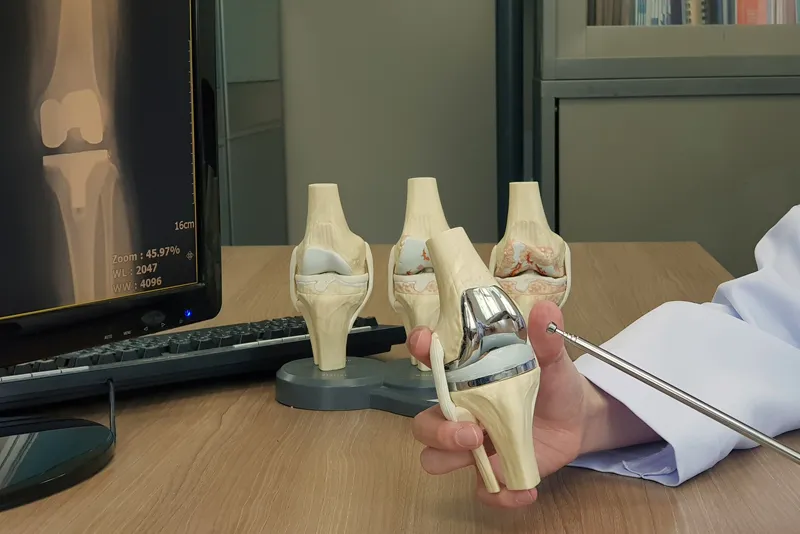
Joint Becomes the Biggest Pain: Total Knee Replacement
The knee constitutes the largest joint in the body. Under normal circumstances, it is easily taken for granted…